Witnessing Ngaben: Understanding Bali's Unique Cremation Ceremony
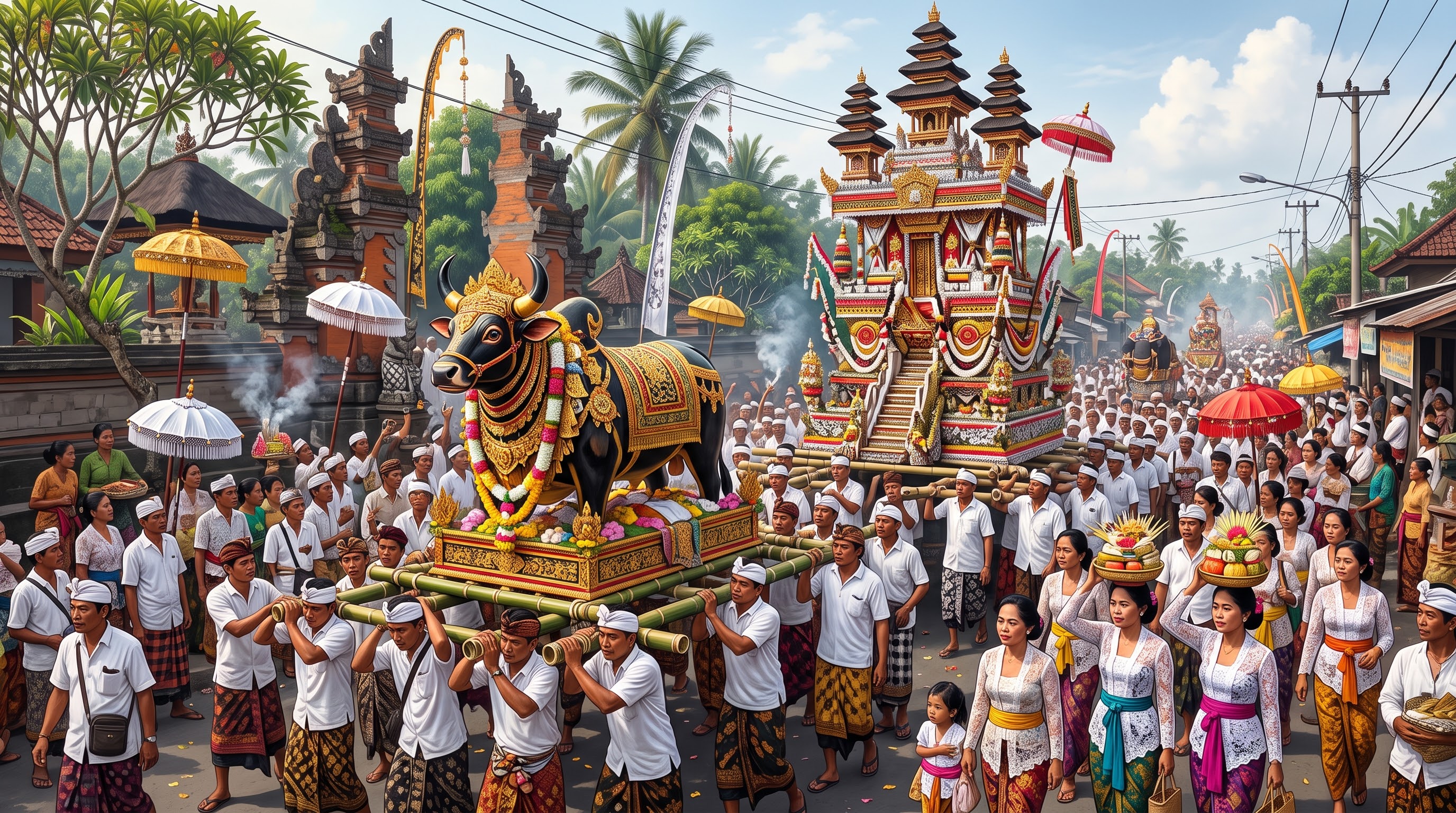
If you happen to be traveling in Bali and see a massive, colorful procession with gamelan music echoing down the street, you might be witnessing a Ngaben. For tourists, this might look like a grand festival, but it is actually one of the most sacred and profound Hindu ceremonies in Bali: the cremation of the dead.
In Western culture, funerals are usually somber events filled with grief. In Bali, Ngaben is a vibrant, loud, and sometimes joyful celebration. Let’s dive deeper into the meaning, the process, and the philosophy behind this extraordinary ritual.
The Philosophy Behind Ngaben
In Balinese Hinduism, life is a cycle of reincarnation (Samsara). The human body is merely a temporary vessel for the soul (Atman). When someone passes away, their soul must be released from the physical body to continue its journey to the afterlife, ultimately aiming for Moksha (liberation from the cycle of rebirth).
Ngaben is the ritual to purify the spirit and return the five elements of the body (earth, water, fire, air, and space) back to the universe. It is highly symbolic that the ceremony is led by joy rather than sorrow, as the family is celebrating the soul's liberation from worldly suffering.
The Grand Procession (Ngangkat)
The most visually spectacular part of Ngaben is the procession. The body is placed inside a beautifully decorated wooden structure called a Bade (a towering, multi-tiered cremation tower) and a coffin shaped like a sacred animal, such as a cow or a bull (called Lembu).
These structures are carried by dozens of men through the streets. They often spin the tower in a counter-clockwise direction at crossroads. This is not just for show; it is a symbolic act to confuse evil spirits and prevent them from following the soul to the afterlife. The procession is accompanied by traditional Balinese gamelan music, making it a loud and energetic spectacle.
The Cremation (Pelebon)
Once the procession reaches the cremation ground (usually a village cemetery), the real ceremony begins. The body is transferred from the Bade into the cremation pit. The family and close relatives will then set the fire, symbolizing the destruction of the physical body to release the soul.
After the body is completely turned to ashes, the family will collect the ashes and the remaining bones. These are then purified with holy water and scattered into the sea or a sacred river in a final ritual called Nganyud, symbolizing the return of the physical elements to nature.
Can Tourists Watch Ngaben?
Yes, tourists are generally allowed to watch the ceremony, and the Balinese are usually very welcoming to respectful observers. However, it is crucial to remember that this is a sacred religious event, not a tourist show. You are witnessing a family's most important rite of passage.
Etiquette for Tourists
If you plan to watch a Ngaben ceremony, please follow these strict rules of respect to ensure you do not offend local customs:
- Dress Appropriately: Wear modest clothing. It is best to wear a traditional sarong and a sash (selendang) to show respect for the sacred environment.
- Stay Out of the Way: Do not block the procession. Keep a respectful distance and stand on the side of the road. The carriers need space to maneuver the heavy Bade.
- Do Not Interfere: Never step in front of someone who is praying or carrying the Bade. Do not walk in the path of the procession.
- Ask Before Taking Photos: While photos from a distance are usually okay, if you want to take close-up photos of the grieving family, it is polite to ask for permission first using gestures. Never use a flash or a drone without permission.
- Do Not Make Noise: Avoid laughing loudly, talking on your phone, or showing disrespectful body language.
Witnessing a Ngaben ceremony can be a deeply moving experience. It offers a unique window into the Balinese way of life, where death is not an end, but a beautiful transition.
Experience Bali's Culture Safely and Respectfully. If you want to explore the island's traditions without worrying about getting lost or acting improperly, our local guides are here to help. Book a Cultural Tour with Diwira Travel today.