Bali Transport Guide: Rental Scooter vs Online Taxi on a Budget
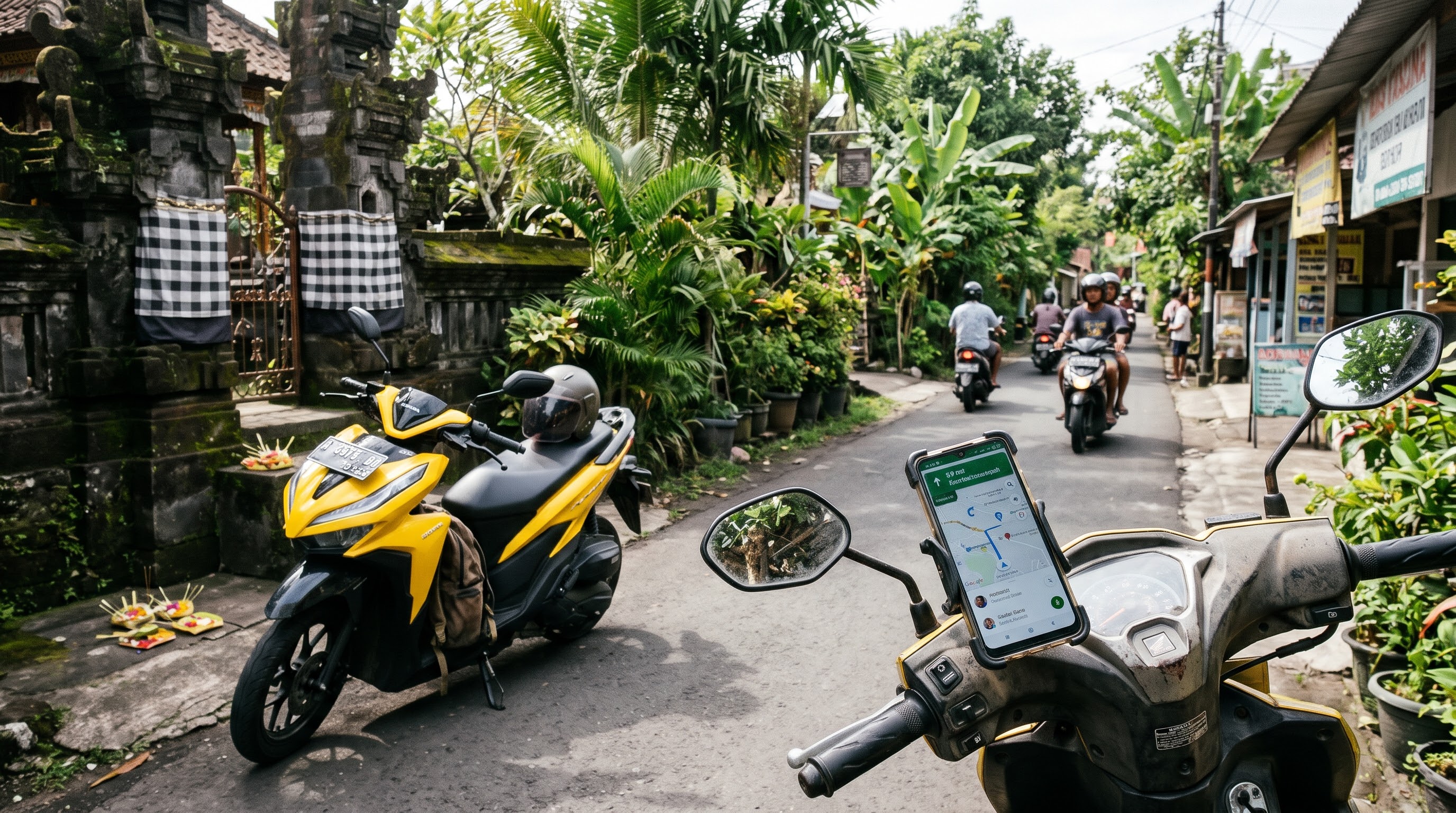
Ask any traveler about their biggest frustration in Bali, and the answer is almost always the same: traffic. Getting from point A to point B on this tropical island can either make or break your daily budget. The two most popular options for independent travelers are renting a scooter and using ride-hailing apps like Grab or Gojek.
While the internet is flooded with basic comparisons, this guide goes deeper. We will not only compare the prices but also uncover the hidden "taxi mafia" zones, the strict police enforcement on licenses, and how to handle your arrival at the airport without getting ripped off. If you want to master transportation in Bali, this is your definitive playbook.
1. The True Cost of Scooter Rental in Bali
On paper, a scooter is the cheapest way to explore the island. You can find daily rentals ranging from IDR 60,000 to 100,000 (approximately USD $4 to $6.50) for a standard 125cc scooter like a Honda Scoopy or Vario. If you are staying for a month, the monthly rate can drop to around IDR 1,500,000 (USD $100), which is incredibly budget-friendly.
However, the sticker price is never the full story. Here is what most blogs do not tell you about the hidden costs of a scooter:
- The License Gamble: This is the most critical point. To legally ride a scooter in Bali, you must have a valid motorcycle license from your home country AND an International Driving Permit (IDP) with the motorcycle category stamped on it. Many rental shops will hand you the keys without checking, but the police are actively conducting raids in tourist hotspots like Canggu, Seminyak, and Uluwatu. Fines can range from IDR 300,000 to 500,000, and without the proper license, your travel insurance will likely be void if you have an accident.
- The Hospital Risk: Scooter accidents are the number one cause of injuries for foreign tourists in Bali. The roads are narrow, the traffic is chaotic, and local driving habits take getting used to. If you are not a confident, experienced rider, the potential medical bills far outweigh the savings.
- Parking Fees: While small (usually IDR 2,000 to 5,000), these add up, and you often have to pay informal "parking attendants" wherever you stop.
Verdict: Only rent a scooter if you are a licensed, experienced rider staying in a quieter area (like Sanur or Ubud) and not trying to navigate the chaos of Canggu during rush hour.
2. The Reality of Online Taxis (Grab & Gojek)
Ride-hailing apps revolutionized travel in Southeast Asia. Grab (Singapore-based) and Gojek (Indonesian) are the dominant players in Bali. They offer upfront, fixed pricing, which removes the stress of haggling. A short 3-5 km trip on a motorbike taxi (GrabBike/GoRide) costs around IDR 15,000 to 30,000, while a car (GrabCar/GoCar) for the same distance will set you back IDR 30,000 to 60,000.
But there is a significant catch that most tourists discover the hard way: The "No-Go" Zones.
Bali has a complex social structure governed by local communities called Banjar. In many tourist areas, local taxi cooperatives have agreements that prohibit ride-hailing apps from picking up passengers in certain zones. You might successfully book a driver, only to have them message you saying, "I cannot enter your area, please walk to the main road." This is especially common in Canggu, Seminyak, and at some beach clubs.
Furthermore, if you are a group of four with large luggage, a GrabCar might not fit everyone. You would need to book an XL car, which increases the price significantly.
Verdict: Grab and Gojek are the best default for short, solo trips, or for couples hopping between cafes and beaches. Just be prepared to walk a few hundred meters to a "Grab-friendly" pickup spot if you are in a restricted area.
3. The Airport Dilemma: Bali Airport Taxi vs. Apps
Arriving at Ngurah Rai International Airport (DPS) can be overwhelming. You will be bombarded with drivers offering "transport" as soon as you exit customs. Do not take these. They often charge exorbitant "tourist prices."
Here is how to handle your arrival cheaply and safely:
- Official Airport Taxi: The airport has an official taxi counter. A ride to Kuta or Seminyak costs around IDR 80,000 to 180,000, while a trip to Ubud (which takes 1.5 to 2 hours) will cost around IDR 450,000 to 500,000 for an economy car. This is a fixed, safe price.
- Grab/Gojek Lounges: Both apps now have official lounges at the airport. You can connect to the airport Wi-Fi, order your ride in the app, and wait in a designated area. This is often cheaper than the official taxi counter, but be aware of a small airport levy (around IDR 10,000-15,000) added to the fare.
Pro Tip: If you are traveling with a lot of luggage or a family, pre-booking a private airport transfer online before you fly is often the most stress-free option, as the driver will be waiting for you with a sign, and the price is fixed.
4. The Smart Hybrid Strategy: What Locals Do
The most budget-savvy travelers do not choose one method over the other; they mix them based on the situation. Here is the ultimate strategy to save money and stay safe:
- Use Gojek/Grab for 80% of your trips: For getting to dinner, going to the beach, or running errands, the apps are unbeatable for convenience and price transparency.
- Hire a Private Driver for Day Trips: If you want to visit Ubud, Uluwatu, or Mount Batur in one day, do not try to do it on a scooter. Hiring a private driver for 8-10 hours costs around IDR 600,000 to 800,000 (USD $40-$50). Split this cost between two or four people, and it becomes cheaper than multiple Grab rides, while also giving you a local guide and air conditioning.
- Walk: In areas like Ubud center or Seminyak, traffic is so bad that walking is often faster than driving. Plus, it is free.
5. A Note on "Blue Bird" Taxis
If you need a metered taxi and the apps are failing (perhaps due to a storm causing surge pricing), look for a Blue Bird taxi. They are light blue with a white top light and a "Blue Bird" logo. They are the most reputable taxi company in Bali and always use the meter. Avoid taxis with similar-sounding names like "Blue Star" or "Express Bird"—these are imitations that will overcharge you.
Final Thoughts: Transport in Bali does not have to drain your wallet. By understanding the legal requirements for scooters, respecting the local "no-go" zones for apps, and knowing when to splurge on a private driver, you can navigate the Island of the Gods like a seasoned pro.