Gebug Ende Festival: The Sacred Rattan War of Seraya, Bali
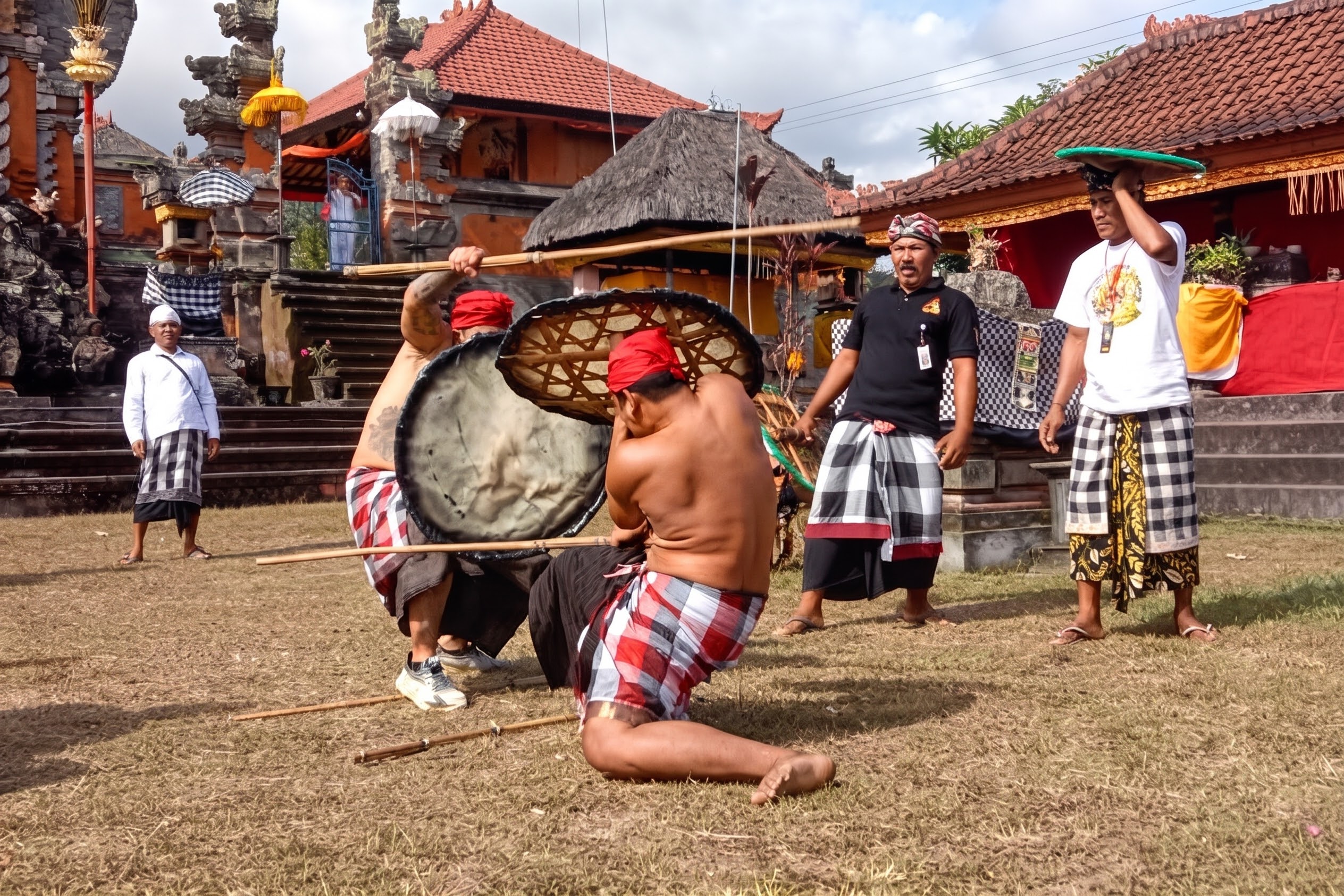
Bali is an island steeped in ritual and tradition, but few ceremonies are as visceral and captivating as the Gebug Ende festival. Held in the ancient village of Seraya in Karangasem Regency, East Bali, this ritualistic "war" is a fascinating blend of bravery, brotherhood, and spiritual devotion.
Unlike the more famous Ogoh-Ogoh or Mekare-kare, Gebug Ende is a unique tradition that has been passed down through generations, serving a very specific and vital purpose: to summon rain during the dry season.
What is Gebug Ende?
The name Gebug Ende comes from two Balinese words: Gebug (to strike) and Ende (the shield). In this ritual, two men face each other in a friendly duel. One wields a long, flexible rattan stick (approximately 1.5 to 2 meters long), while the other defends himself with a circular shield made of dried cowhide.
While it looks like a violent fight, it is deeply spiritual. The ritual is performed as a prayer to Ida Sang Hyang Widhi Wasa (God Almighty) to send rain, ensuring the fertility of their land and the prosperity of the village.
The History and Legend
The origins of Gebug Ende are rooted in the history of the Seraya people. According to local legend, the warriors of Seraya were known for their physical strength and invulnerability. They were once chosen as elite soldiers for the King of Karangasem to fight against the Kingdom of Seleparang in Lombok.
During a fierce battle, heavy rain suddenly fell, which the Karangasem warriors saw as a divine blessing that helped them win. When they returned to Seraya, the village was suffering from a severe drought. Remembering the rain that saved them in battle, the warriors initiated a ritual involving mock combat to ask the gods for rain. This tradition has been preserved ever since.
The Rules of the Sacred Duel
Despite its appearance, Gebug Ende is governed by strict rules designed to ensure safety and uphold the sanctity of the ritual. Two referees, known as Saye or Juru Kembar, oversee the match.
- Target Areas: Players are only allowed to strike above the waist (back, chest, and shoulders). Striking below the waist or the head is strictly forbidden.
- The Shield: The Ende must be used to deflect blows. If a player drops their shield or is cornered, the match ends.
- No Resentment: The most important rule is the philosophy behind the fight. After the match, both participants embrace and are expected to hold no grudges. The blood drawn from the rattan strikes is considered an offering, not a cause for anger.
What to Expect as a Visitor
Witnessing Gebug Ende is a privilege. The atmosphere is electric, filled with the rhythmic beats of Tabuh Bebondongan (traditional gamelan music featuring drums, gongs, and flutes) and the cheers of the villagers.
Participant Attire
The fighters wear simple but symbolic clothing: bare-chested, wearing a traditional kamen (sarong), a black-and-white poleng cloth, and a red headband (destar) which symbolizes courage.
When and Where
Gebug Ende is typically held during the dry season, often around October (Sasih Kapat in the Balinese calendar), when the village needs rain for their crops [citation:6]. It takes place in Seraya Village, Karangasem, though the tradition has also been carried by the Seraya diaspora to other areas like Patas and Pemuteran.
Visitor Tips
- Respect the Ritual: Remember that this is a sacred ceremony, not just a performance. Dress modestly and follow the instructions of the local guides.
- Bring a Camera: The dynamic action and the vibrant colors of the ceremony make for incredible photography.
- Prepare for Crowds: The event draws many locals and tourists. Arrive early to get a good vantage point.
The Cultural Significance
In 2016, Gebug Ende was officially recognized as an Intangible Cultural Heritage of Indonesia [citation:1]. For the people of Seraya, this tradition is more than just a game; it is a vital link to their ancestors, a demonstration of their unity, and a profound expression of their relationship with nature and the divine.
Final Thoughts: If your travels bring you to East Bali during the dry season, do not miss the chance to witness Gebug Ende. It is a raw, authentic, and unforgettable glimpse into the soul of the Bali Aga people.