Penglipuran Village: Exploring the World's Cleanest Village in Bali
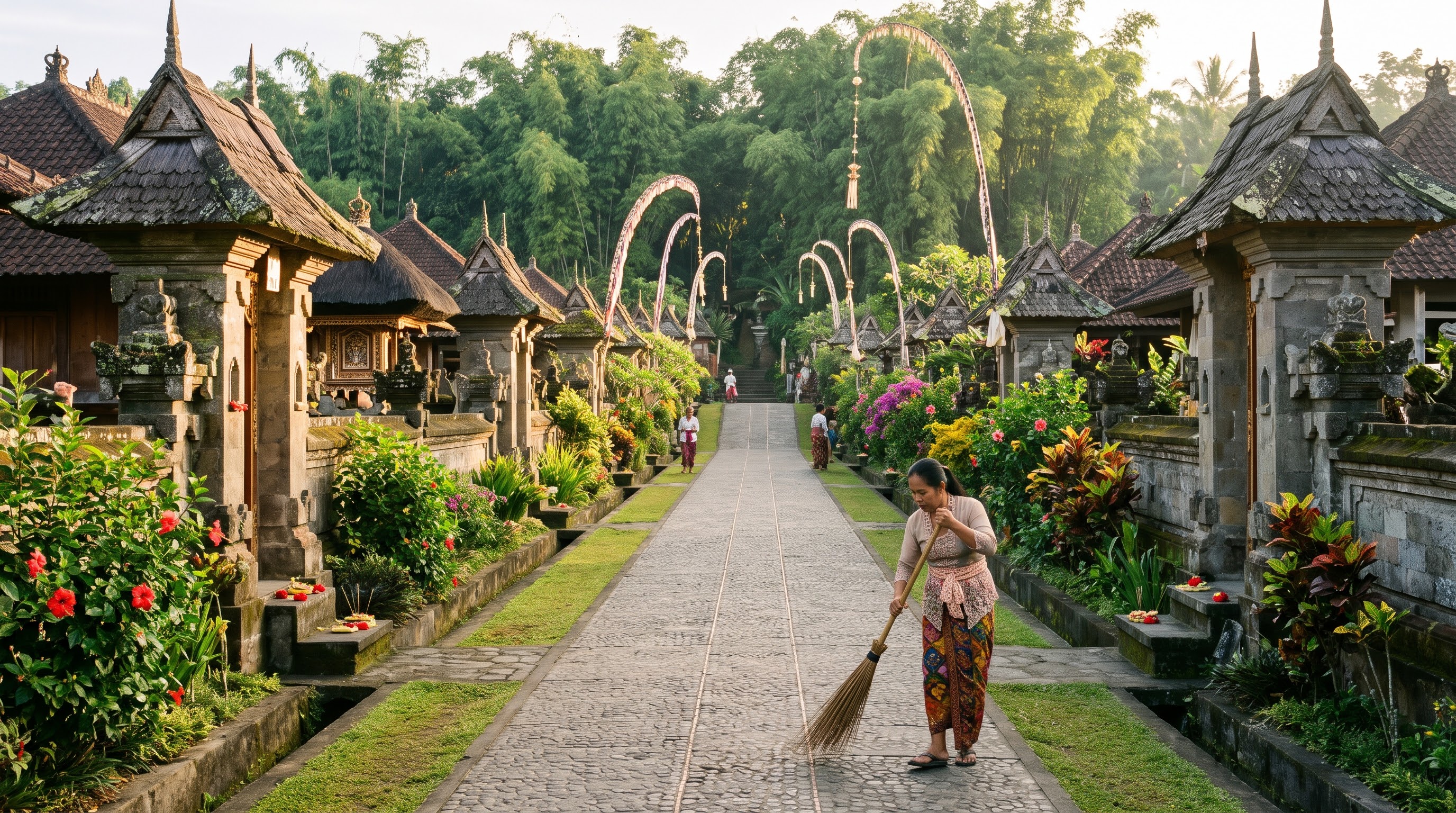
Bali is an island of contrasts. In the south, you have the bustling traffic of Canggu and the luxury resorts of Seminyak. But drive just 45 kilometers north to the regency of Bangli, and you will find a completely different world. Here, nestled at the foot of Mount Batur, lies Penglipuran Village—a place so remarkably clean and well-preserved that it has been recognized as one of the cleanest villages in the world.
But Penglipuran is not a theme park or a staged tourist attraction. It is a living, breathing community of around 1,000 people who have managed to harmonize ancient traditions with modern tourism. In this guide, we go beyond the typical photo spots and explore the philosophy, the daily life, and the unique experiences that make a visit to Penglipuran truly unforgettable.
The Secret Behind the Cleanliness: A Philosophy, Not a Rule
When you walk through the main pathway of Penglipuran, the first thing you will notice is the absence of litter. There are no discarded plastic bottles, no cigarette butts, and no stray leaves cluttering the paving stones. But the cleanliness here is not enforced by security guards or signs; it is ingrained in the culture.
The community strictly adheres to the Balinese Hindu philosophy of Tri Hita Karana, which translates to "Three Causes of Well-being." This philosophy emphasizes harmony between three elements: humans with God (Parahyangan), humans with other humans (Pawongan), and humans with nature (Palemahan).
The people of Penglipuran believe that if they maintain a clean and harmonious relationship with their environment, the environment will reciprocate by providing them with prosperity and peace. This is not just a concept for tourists; it is a daily practice. You will see locals sweeping the streets in the morning, not because they are paid to do so, but because it is a form of devotion to their ancestors and their land.
What to See and Do in Penglipuran
1. The Uniform Architecture and Angkul-Angkul
One of the most striking visual features of Penglipuran is the uniformity of the houses. Along the main street, every house features an identical traditional Balinese gate, known as angkul-angkul, and a uniform fence. This is not for aesthetic purposes; it is a result of the village's traditional spatial planning known as Tri Mandala, which divides the village into three zones: the sacred (top), the residential (middle), and the profane (bottom).
Walking down this path feels like stepping back in time. The houses are built with traditional materials, primarily bamboo and wood, and the doors are often intricately carved.
2. The Sacred Bamboo Forest
At the northern end of the village lies a 45-hectare bamboo forest that is considered sacred. This forest is not just a scenic backdrop; it is the lifeblood of the village. The bamboo is used for building materials, cooking utensils, and traditional crafts. The forest also serves as a crucial water catchment area, ensuring the village has a steady supply of clean water.
Walking through the bamboo forest is a meditative experience. The air is cool, the light filters through the tall stalks, and the only sounds are the rustling leaves and the distant chirping of birds.
3. The "Be a Balinese for a Day" Experience
Recently, Penglipuran has introduced a unique cultural program that allows visitors to do more than just walk around. The "Be a Balinese for a Day" experience invites tourists to dress in traditional Balinese attire (kamen and udeng), participate in cultural activities, and even stay overnight in a local home.
You can learn to make traditional offerings (canang sari), try your hand at weaving bamboo, or simply sit with a local family and learn about their daily life. This is the ultimate way to support the community-based tourism model that Penglipuran is famous for.
What to Eat: The Local Flavor
A visit to Penglipuran is not complete without tasting the local cuisine. One of the signature dishes here is Mujair Nyat-Nyat, a traditional dish made from tilapia fish cooked with rich Balinese spices until the sauce reduces and infuses the fish.
For a refreshing drink, look for Loloh Cemcem. This is a traditional herbal drink made from the leaves of the cemcem tree, mixed with tamarind, palm sugar, and lime. It is believed to have medicinal properties and is perfect for cooling down after a walk in the sun.
Practical Tips for Visiting Penglipuran
1. The Best Time to Visit Bali (and Penglipuran)
To fully enjoy the outdoor beauty of Penglipuran, you should visit during the dry season, which is the best time to visit Bali (April to October). However, even within the dry season, timing your visit to the village is crucial.
Arrive early (before 9:00 AM) or late afternoon (after 4:00 PM). By 10:30 AM, the tour buses start arriving, and the narrow main street can become crowded. Early morning also offers the best lighting for photography, with soft sunlight illuminating the gates.
2. Respect the Community
Remember that Penglipuran is a living village, not a museum. Do not enter private homes unless invited. If you want to take photos of the locals, ask for permission first. Dress modestly, covering your shoulders and knees, out of respect for the local customs.
3. Bring Cash
While there is an ATM near the entrance, it is always safer to bring cash. The entrance fee, local food, and small souvenirs are mostly cash-based. There is also a small donation box if you wish to contribute to the village's maintenance.
How to Get There
Penglipuran is located in Kubu, Bangli Regency, about a 1.5-hour drive from Ubud and 2 hours from Seminyak or Canggu. The most convenient way to get there is by hiring a private driver. You can easily combine a trip to Penglipuran with other nearby attractions like the Kintamani volcano viewpoint or the Tirta Empul Water Temple.
Final Thoughts: Penglipuran Village is a powerful reminder that tourism and tradition can coexist. It is a place where the past is not just preserved, but lived. By visiting with respect and curiosity, you become a part of their story, even if only for a day.