Sanggah Merajan: The Sacred Family Temple of Balinese Hindus
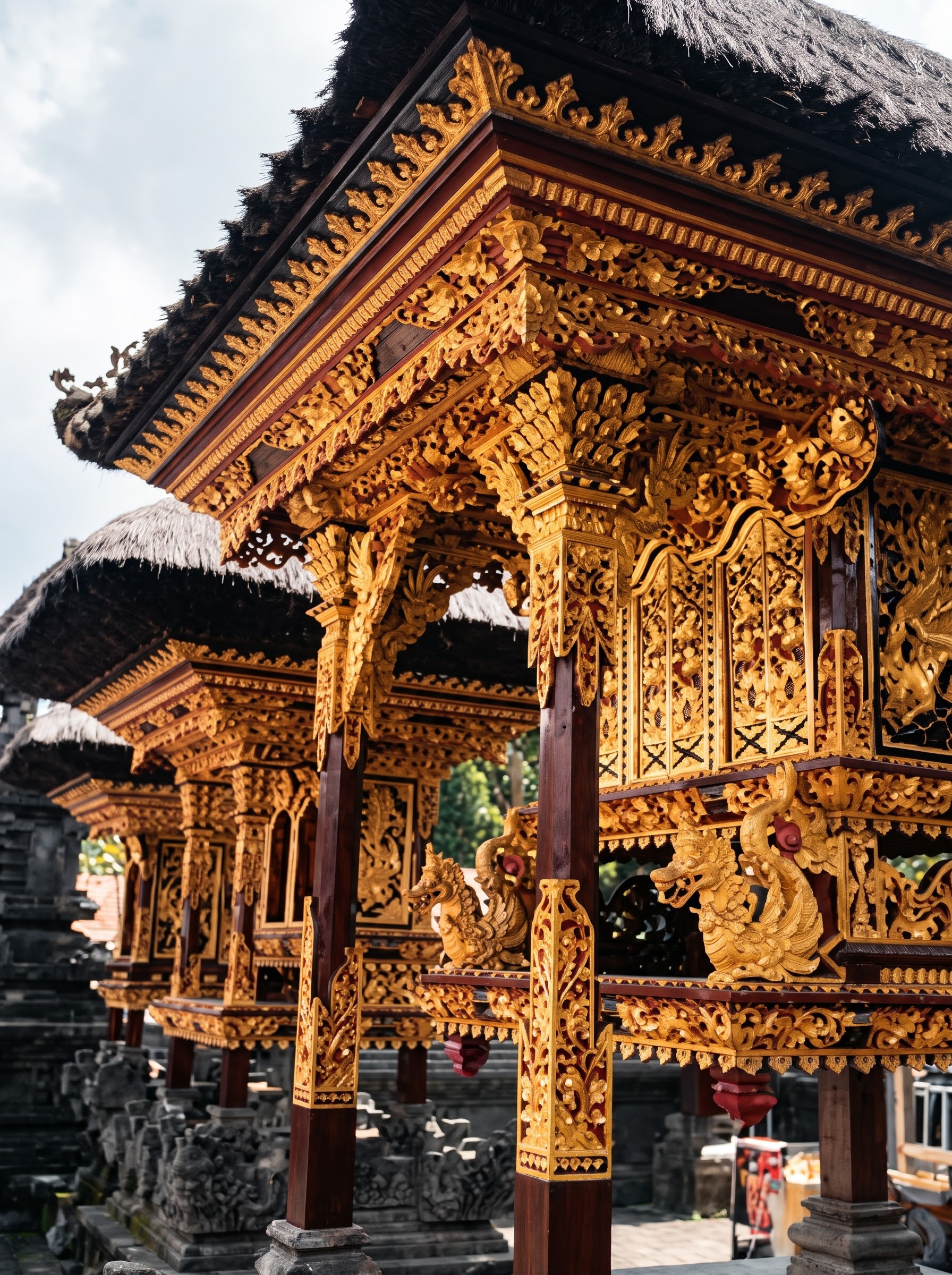
In Bali, you cannot separate daily life from spirituality. Every traditional Balinese compound is not just a place to live; it is a microcosm of the universe. At the heart of this spiritual geography lies the Sanggah or Merajan—the sacred family temple located within the home. For visitors, understanding this structure is key to understanding the Balinese way of life. Here is a comprehensive guide to the Sanggah Merajan.
What is Sanggah or Merajan?
Sanggah (often referred to as Merajan, Pamerajan, or Pura Kawitan) is a private family temple located in the northeast corner of a Balinese traditional house compound. This direction, known as Kaja Kangin, is considered the most sacred orientation in Balinese Hinduism, pointing towards the mountains (Mount Agung) and the rising sun.
The terms are often used interchangeably, though there are subtle regional and caste differences. Generally, "Sanggah" is the more common term used by the majority of the population (Sudra), while "Merajan" is often used by the higher castes (Wesya, Ksatria, and Brahmana). Regardless of the name, its essence remains the same: it is the spiritual center of the family, a place to connect with ancestors and the divine.
The Function of Sanggah Merajan
The primary function of the Sanggah is to serve as a place of worship for the family's ancestors (Pitara) and to honor Ida Sang Hyang Widhi Wasa (God Almighty) in His various manifestations. It is believed that the spirits of deceased family members who have been cremated (Ngaben) reside in the Sanggah after a series of purification rituals.
Beyond ancestor worship, the Sanggah is the center for all family religious activities. It is where the family seeks protection, expresses gratitude for the harvest, and prays for the well-being of the household. It acts as a spiritual anchor, reminding the family of their roots and their connection to the divine.
Types of Sanggah and Their Pelinggih (Shrines)
The complexity of a Sanggah depends on the family's caste and social status, but they generally fall into two main categories: Sanggah Kemulan and Sanggah Panti.
1. Sanggah Kemulan
This is the simplest form of family temple, typically found in the homes of commoners (Sudra). It is named after its main shrine, the Kemulan, which has three compartments. These compartments symbolize the Hindu trinity (Brahma, Vishnu, Shiva) or the three main stages of life. The most important pelinggih here is the Kemulan Rong Tiga, dedicated to the family's deified ancestors.
2. Sanggah Panti
This is a more complex and elaborate family temple, usually built by higher-caste families or those with a deeper lineage. It features multiple shrines (pelinggih) dedicated to various deities and ancestors. Some of the important pelinggih found here include:
- Pelinggih Padmasana: The highest shrine, dedicated to the Supreme God (Ida Sang Hyang Widhi Wasa). Not all Sanggah have a Padmasana; it is often reserved for those with a higher spiritual status.
- Pelinggih Taksu: Dedicated to the god of spiritual power and charisma, often used for artistic or spiritual endeavors.
- Pelinggih Penglurah: The guardian shrine, placed near the entrance to protect the temple from negative forces.
- Pelinggih Bhatara Alit: Dedicated to the ancestors of the family's lineage.
Who is Worshipped Here?
The Sanggah is primarily dedicated to Sang Hyang Atma—the deified souls of the family's ancestors. It is believed that after the Ngaben (cremation) and the Nyekah/ Memukur (purification of the soul) ceremonies, the ancestors reside in the Sanggah and act as guardians and mediators between the living family and the Supreme God. Offerings are also made to other deities, such as Dewi Sri (goddess of rice and prosperity) and Lord Shiva in his aspect as the destroyer and transformer.
Why Must Every Balinese Hindu Have a Sanggah?
Having a Sanggah is not just a cultural tradition; it is a religious obligation. In Balinese Hinduism, the family is seen as a continuous chain connecting the past, present, and future. The Sanggah is the physical and spiritual link to that chain. Without it, the family loses its spiritual anchor. It is where the living honors their debt to their ancestors for giving them life.
What Happens If Someone Does Not Have a Sanggah?
In the past, a Balinese house without a Sanggah was considered incomplete and spiritually vulnerable. It was believed that without a place for the ancestors to reside, the family would be cut off from their spiritual lineage, and the souls of their ancestors might become wandering spirits (bhuta).
In modern times, due to urbanization and space constraints, some Balinese living far from their ancestral village may not have a physical Sanggah in their current home. However, they are still expected to maintain a spiritual connection by praying at their ancestral temple (Pura Kawitan) in their home village whenever possible, or at a public temple (Pura).
When Do Balinese Make Offerings at the Sanggah?
Offerings (Mebanten) at the Sanggah are made daily, usually in the morning and evening. This simple ritual involves placing a small offering (Canang) and burning incense. More elaborate offerings are made during special days such as:
- Purnama and Tilem (Full Moon and New Moon): Important times for prayers and purification.
- Galungan and Kuningan: When the ancestors are believed to visit the home.
- Saraswati and Pagerwesi: Days dedicated to knowledge and spiritual strength.
- Family Events: Such as weddings, births, or rites of passage (Manusa Yadnya).
- Tumpek Days: Days dedicated to specific aspects of life, such as animals (Tumpek Kandang) or plants (Tumpek Uduh).
Explore the Spiritual Heart of Bali with Diwira Travel. Our cultural tours will take you off the beaten path, visiting traditional villages and family compounds to see these beautiful Sanggah firsthand. Gain a deeper understanding of Balinese daily life with our knowledgeable local guides. Check out our Bali Tour Packages today.