What is Canang Sari? A Traveler's Guide to Bali's Daily Offerings
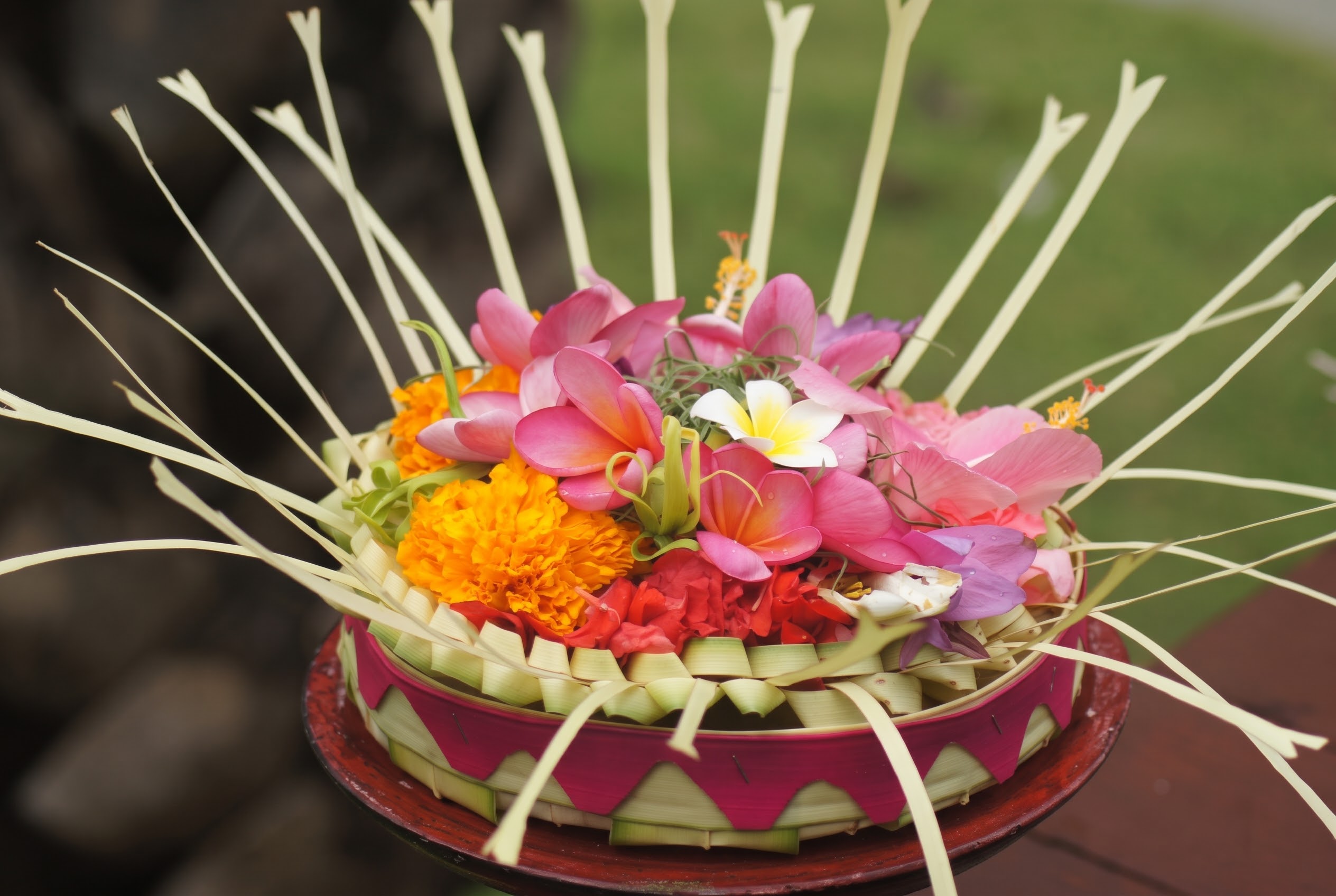
As you walk through the streets of Bali, you will undoubtedly notice small, beautifully woven trays of flowers and greenery placed on sidewalks, in front of shops, on car dashboards, and at temple entrances. These are Canang Sari, the most ubiquitous and recognizable symbol of Balinese Hindu daily life. For a visitor, they might look like simple decorations, but they are actually profound expressions of gratitude, devotion, and spiritual balance. Here is everything you need to know about this essential aspect of Balinese culture.
What is Canang Sari?
Canang Sari is a daily offering made by Balinese Hindus as a gesture of thanks to Ida Sang Hyang Widhi Wasa (God Almighty) and all His manifestations. The name itself reveals its purpose: "Can" means beautiful, "Nang" means purpose, and "Sari" means essence or core. Essentially, it is a beautiful vessel created to carry the essence of gratitude and prayer.
It is the smallest and most fundamental form of offering in Balinese Hinduism, yet it is considered the heart of every ritual. It is made from a woven palm-leaf tray (usually young coconut leaves called janur), filled with colorful flowers, a mixture of betel leaf and lime called porosan, and often rice, snacks, and incense.
The Purpose: Why Do Balinese Offer Canang?
The primary reason is to express daily gratitude for life, peace, and prosperity. It is a way of saying thank you for the blessings received and a request for continued protection and harmony. Beyond gratitude, the offering serves to maintain balance between the microcosm (the human self) and the macrocosm (the universe). By making offerings every day, Balinese Hindus strive to keep negative forces at bay and cultivate a pure mind and heart.
Types of Canang
While Canang Sari is the most common, there are many specialized variations for different purposes and ceremonies:
- Canang Sari: The standard daily offering, featuring a square base and a circular arrangement of flowers on top, symbolizing the meeting of Lingga and Yoni.
- Canang Genten: Similar to Canang Sari but includes additional items like snacks, bananas, and sometimes red and white porridge. It is often used for ceremonies related to youth, such as weddings or tooth-filing.
- Canang Burat Wangi: This type includes fragrant ingredients like sandalwood and special oils, and is typically offered during Purnama (full moon) and Tilem (new moon).
- Canang Pasucian (or Pengraos): A purification offering that includes betel nut, lime, and tobacco. It is essential in meetings or important conversations to purify the mouth and intentions.
- Canang Pangeresikan: Used as the first purification step in major ceremonies, containing ingredients like turmeric, rice flour, and lime.
Why Are Offerings Placed in Front of Houses?
Placing Canang in front of a home, shop, or even on a motorcycle is a way to purify the immediate environment and invite positive energies. It is an act of acknowledging that the space is inhabited by both the living and the spiritual forces. When placed on the street, it is also a prayer for the safety of everyone who passes by. The offering is usually placed on a small altar or directly on the ground, accompanied by a burning stick of incense to carry the prayers upward.
What Are the Ingredients?
The making of Canang is an art form in itself. The core components include:
- Janur (Young Coconut Leaf): Woven into the base and decorative shapes.
- Porosan: A mixture of betel leaf, areca nut, and lime, symbolizing the Hindu trinity (Brahma, Vishnu, Shiva).
- Bunga (Flowers): Specifically arranged by color and direction: white (East), red (South), yellow (West), and blue/green (North). A central fragrant flower (like pandan or frangipani) is also included.
- Beras (Rice): Symbolizing the seed of life and the presence of the soul.
- Other items: Sometimes small snacks, fruit, or sugarcane are added depending on the type.
Who Makes Them and Where to Buy Them?
Traditionally, making Canang is the daily responsibility of Balinese women in the household. It is often a communal activity where mothers and daughters sit together to weave the intricate designs. However, in modern Bali, many people buy them ready-made. You can find Canang Sari sold at traditional markets (Pasar) in the early morning. Prices are very affordable, typically around IDR 30,000 to 40,000 for a bundle of 25 during normal days, though prices can rise during major holidays like Galungan.
Etiquette for Tourists: What to Do and Not Do
As a visitor, it is important to treat these offerings with respect. Here are the essential rules:
DO:
- Watch Your Step: Always look down when walking on sidewalks or entering shops. Try to walk around the offerings, not over them.
- Show Respect: If you accidentally step on one, do not panic. Balinese people are very understanding of accidents. A quiet apology or simply being more careful is enough.
- Appreciate from a Distance: It is fine to take photos of them as part of the scenery, but do not treat them as props for a staged photo.
DON'T:
- Do Not Kick or Move Them: Never deliberately kick an offering aside or move it to make way for yourself.
- Do Not Take the Flowers: The flowers and other items are sacred offerings, not souvenirs.
- Do Not Step on Them Intentionally: Treating the offerings with carelessness is considered disrespectful.
Experience the Beauty of Bali's Daily Offerings. Understanding the meaning behind Canang Sari will enrich your travels and deepen your connection to the island's culture. If you want to learn more about Balinese traditions from a local perspective, our team at Diwira Travel is here to help. Explore our Bali Tour Packages for a more meaningful journey.